Depth First Search Algorithm to Delete Insufficient Nodes in Roo
- 时间:2020-09-11 08:17:29
- 分类:网络文摘
- 阅读:145 次
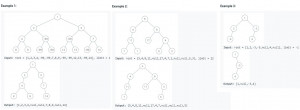
Given the root of a binary tree, consider all root to leaf paths: paths from the root to any leaf. (A leaf is a node with no children.) A node is insufficient if every such root to leaf path intersecting this node has sum strictly less than limit. Delete all insufficient nodes simultaneously, and return the root of the resulting binary tree.
insufficient-nodes-in-binary-tree
Example 1:
Input: root = [1,2,3,4,-99,-99,7,8,9,-99,-99,12,13,-99,14], limit = 1
Output: [1,2,3,4,null,null,7,8,9,null,14]Example 2:
Input: root = [5,4,8,11,null,17,4,7,1,null,null,5,3], limit = 22
Output: [5,4,8,11,null,17,4,7,null,null,null,5]Example 3:
Input: root = [1,2,-3,-5,null,4,null], limit = -1
Output: [1,null,-3,4]Note:
The given tree will have between 1 and 5000 nodes.
-10^5 <= node.val <= 10^5
-10^9 <= limit <= 10^9
DFS Algorithm: Passing the Limit From Root to Leaves
Let’s solve this in DFS (Depth First Search) Algorithm – which to be implemented in Recursion. The limit is passed down from the Root to the leaves. The terminating condition is when node is NULL which of course, we return NULL. And when node is a leaf node, we check if the value is small than the current limit – if yes, it is a insufficient node – which will be removed – return NULL.
Otherwise, recursively, we update the left and right child of the current node. And return NULL if both are NULL (meaning all the sub trees are removed).
C++:
1 2 3 4 5 6 7 8 9 10 11 12 13 14 15 16 17 18 19 20 21 22 | /** * Definition for a binary tree node. * struct TreeNode { * int val; * TreeNode *left; * TreeNode *right; * TreeNode(int x) : val(x), left(NULL), right(NULL) {} * }; */ class Solution { public: TreeNode* sufficientSubset(TreeNode* root, int limit) { if (!root) return root; if (root->left == nullptr && root->right == nullptr) { if (root->val < limit) return nullptr; return root; } root->left = sufficientSubset(root->left, limit - root->val); root->right = sufficientSubset(root->right, limit - root->val); return root->left || root->right ? root : nullptr; } }; |
/**
 * Definition for a binary tree node.
 * struct TreeNode {
 *     int val;
 *     TreeNode *left;
 *     TreeNode *right;
 *     TreeNode(int x) : val(x), left(NULL), right(NULL) {}
 * };
 */
class Solution {
public:
    TreeNode* sufficientSubset(TreeNode* root, int limit) {
        if (!root) return root;
        if (root->left == nullptr && root->right == nullptr) {
            if (root->val < limit) return nullptr;
            return root;
        }
        root->left = sufficientSubset(root->left, limit - root->val);
        root->right = sufficientSubset(root->right, limit - root->val);
        return root->left || root->right ? root : nullptr;
    }
};And Java:
1 2 3 4 5 6 7 8 9 10 11 12 13 14 15 16 17 18 19 20 21 22 23 24 25 | /** * Definition for a binary tree node. * public class TreeNode { * int val; * TreeNode left; * TreeNode right; * TreeNode(int x) { val = x; } * } */ class Solution { public TreeNode sufficientSubset(TreeNode root, int limit) { if (root == null) { return null; } if (root.left == root.right) { if (root.val < limit) { return null; } return root; } root.left = sufficientSubset(root.left, limit - root.val); root.right = sufficientSubset(root.right, limit - root.val); return root.left == root.right ? null : root; } } |
/**
 * Definition for a binary tree node.
 * public class TreeNode {
 *     int val;
 *     TreeNode left;
 *     TreeNode right;
 *     TreeNode(int x) { val = x; }
 * }
 */
class Solution {
    public TreeNode sufficientSubset(TreeNode root, int limit) {
        if (root == null) {
            return null;
        }
        if (root.left == root.right) {
            if (root.val < limit) {
                return null;
            }
            return root;
        }
        root.left = sufficientSubset(root.left, limit - root.val);
        root.right = sufficientSubset(root.right, limit - root.val);
        return root.left == root.right ? null : root;
    }
}We can test the equality for left and right node – if they are equal – then both nodes are NULL. The overall complexity is O(N) where N is the number of the nodes in the binary tree.
–EOF (The Ultimate Computing & Technology Blog) —
推荐阅读:数学题:一个长方体长,宽,高都是两位数,并且它们的和是偶数 数学题:若115,200,268被大于1的自然数除 数学题:一只蚂蚁从墙根竖直向上爬到墙头用了4分钟 一位农妇上午挎了一个空篮子笑眯眯地回家 奥数题:秋游时,小红小玲小芳三个好朋友在一个小组一起活动 平年和闰年自测题 数学题:李爷爷家住在半山腰 数学题:无线电元件厂验收一批零件 数学题:调查发现,该学校七年级参加魔方比赛的学生中 数学题:甲乙两辆客车同时从东站开往西站
- 评论列表
-
- 添加评论