How to Design a Tic-Tac-Toe Game?
- 时间:2020-09-24 11:41:27
- 分类:网络文摘
- 阅读:146 次
Design a Tic-tac-toe game that is played between two players on a n x n grid.
You may assume the following rules:
- A move is guaranteed to be valid and is placed on an empty block.
- Once a winning condition is reached, no more moves is allowed.
- A player who succeeds in placing n of their marks in a horizontal, vertical, or diagonal row wins the game.
Example:
Given n = 3, assume that player 1 is “X” and player 2 is “O” in the board.
Could you do better than O(n^2) per move() operation? Could you trade extra space such that move() operation can be done in O(1)? Could you trade extra space such that move() operation can be done in O(1)?
Tic-Tac-Toe Game Design with O(1) Move
Your TicTacToe object will be instantiated and called as such:
1 2 | TicTacToe* obj = new TicTacToe(n); int param_1 = obj->move(row,col,player); |
TicTacToe* obj = new TicTacToe(n);
int param_1 = obj->move(row,col,player);
When a player makes a move, we need to check if he/she wins the game. A simple solution is to check O(N^2) grid for horizontal, vertical and two diagonals to see if they are all occupied by this player. However, a better solution that has O(1) time would be to trade space for time. That is, we use O(N) space to record the number of each players in each row, column and two diagonals.
1 2 3 4 5 6 7 8 9 10 11 12 13 14 15 16 17 18 19 20 21 22 23 24 25 26 27 28 29 30 31 32 33 34 35 36 37 38 39 40 41 42 43 44 45 46 47 48 49 | class TicTacToe { public: /** Initialize your data structure here. */ TicTacToe(int n) { board.resize(n); rowc[0].resize(n); rowc[1].resize(n); colc[0].resize(n); colc[1].resize(n); d[0][0] = 0; d[0][1] = 0; d[1][0] = 0; d[1][1] = 0; for (int i = 0; i < n; ++ i) { board[i].resize(n); rowc[0][i] = 0; rowc[1][i] = 0; colc[0][i] = 0; colc[1][i] = 0; } } /** Player {player} makes a move at ({row}, {col}). @param row The row of the board. @param col The column of the board. @param player The player, can be either 1 or 2. @return The current winning condition, can be either: 0: No one wins. 1: Player 1 wins. 2: Player 2 wins. */ int move(int row, int col, int player) { board[row][col] = player; int n = board.size(); if (++rowc[player - 1][row] == n) return player; if (++colc[player - 1][col] == n) return player; if (row == col) { if (++d[player - 1][0] == n) return player; } if (n - row - 1 == col) { if (++d[player - 1][1] == n) return player; } return 0; } private: vector<vector<int>> board; int d[2][2]; vector<int> rowc[2]; vector<int> colc[2]; }; |
class TicTacToe {
public:
    /** Initialize your data structure here. */
    TicTacToe(int n) {
        board.resize(n);
        rowc[0].resize(n);
        rowc[1].resize(n);
        colc[0].resize(n);
        colc[1].resize(n);
        d[0][0] = 0;
        d[0][1] = 0;
        d[1][0] = 0;
        d[1][1] = 0;
        for (int i = 0; i < n; ++ i) {
            board[i].resize(n);
            rowc[0][i] = 0;
            rowc[1][i] = 0;
            colc[0][i] = 0;
            colc[1][i] = 0;
        }
    }

    /** Player {player} makes a move at ({row}, {col}).
        @param row The row of the board.
        @param col The column of the board.
        @param player The player, can be either 1 or 2.
        @return The current winning condition, can be either:
                0: No one wins.
                1: Player 1 wins.
                2: Player 2 wins. */
    int move(int row, int col, int player) {
        board[row][col] = player;
        int n = board.size();
        if (++rowc[player - 1][row] == n) return player;
        if (++colc[player - 1][col] == n) return player;
        if (row == col) {
            if (++d[player - 1][0] == n) return player;
        }
        if (n - row - 1 == col) {
            if (++d[player - 1][1] == n) return player;
        }
        return 0;
    }
private:
    vector<vector<int>> board;
    int d[2][2];
    vector<int> rowc[2];
    vector<int> colc[2];
};Instead of storing the counters for each player, We can alternatively reduce the space usage to half i.e. increment the counter for player 1 and decrement the counter for player 2. Then we need to check if the absolute value of the counter equals to N.
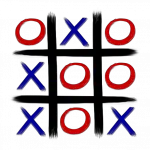
tic-tac-toe
–EOF (The Ultimate Computing & Technology Blog) —
推荐阅读:对转基因食品必须采取最严格保护措施 《食品安全法》修订四大焦点引发关注 秋冬季节风寒感冒 葱白有治疗感冒功效 秋冬时节抗病毒防感冒的食疗养生方 吃香蕉太多也可能伤害到身体的健康 糖类在食物烹饪中能起到什么作用呢? 健康饮食:五种不适宜在深夜吃的食物 养阴益肺润燥止咳之梨的六款食疗方 枸杞子的食用方法以及滋补养生功效 身体健康无虚证的人不宜食用枸杞子
- 评论列表
-
- 添加评论